

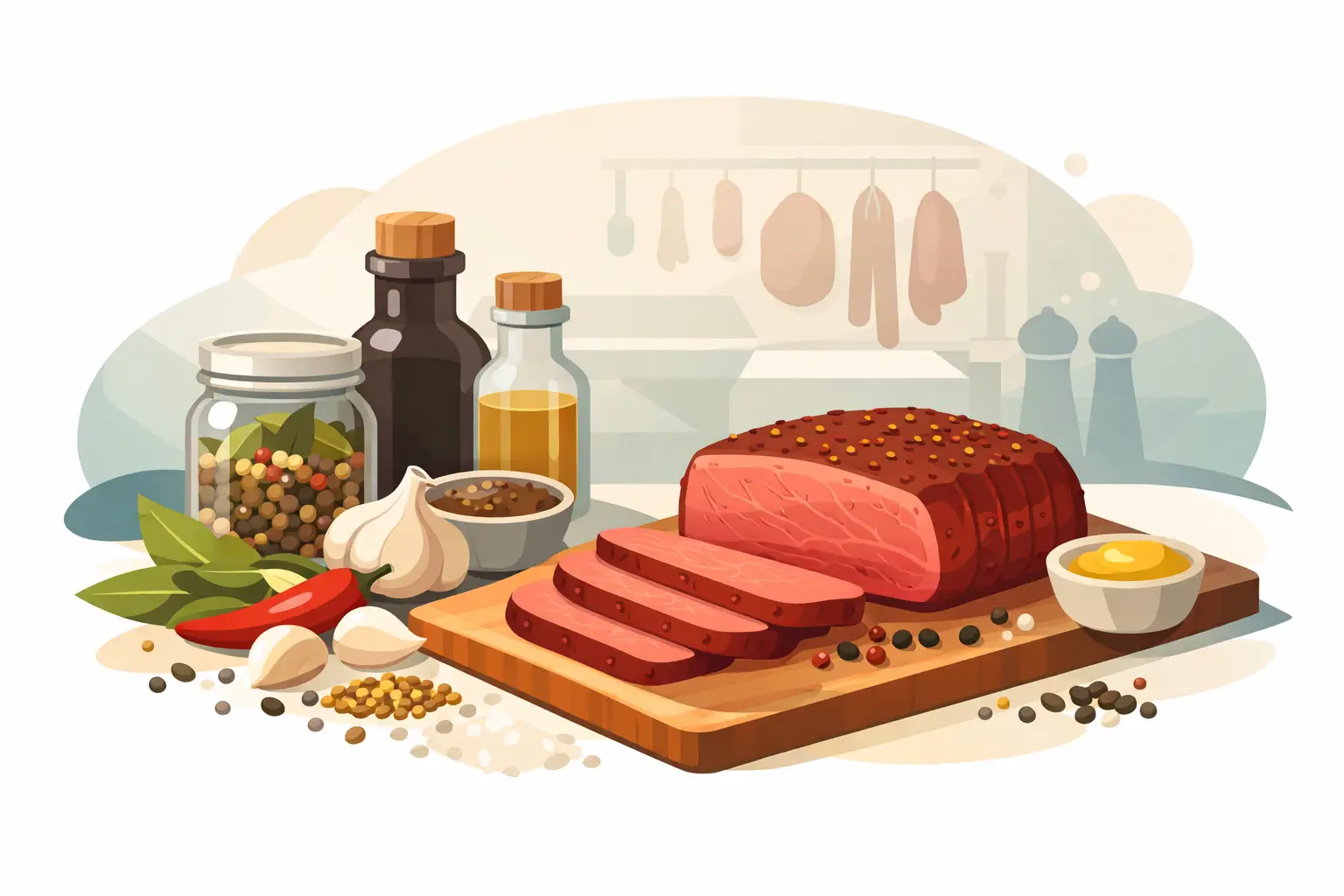
A towering corned beef sandwich does not get its personality from one magic seasoning. What gives corned beef its flavor is a patient combination of salt curing, pickling spices, quality beef, gentle cooking, and the all-important slice. Get any one of those wrong, and you may still have beef, but you will not have that rich, tangy, peppery deli flavor people crave.
At a real New York-style deli, corned beef should taste boldly seasoned without being harsh, tender without turning mushy, and beefy enough to stand up to rye bread, mustard, and a serious appetite. That balance is why a great sandwich feels simple on the plate but takes real know-how behind the counter.
What Gives Corned Beef Its Flavor?
Corned beef begins with beef, most often brisket, that has been cured in a seasoned salt brine. The word “corned” has nothing to do with corn on the cob. It comes from the large grains, or “corns,” of salt once used to preserve meat.
That cure changes more than the shelf life of the brisket. Salt moves into the meat and seasons it from the inside, giving corned beef its unmistakable savory character. It also changes the meat’s texture, helping it hold moisture through a long cook so each slice can be tender, juicy, and ready for a Big Mouth-sized sandwich.
The brine usually includes sugar as well. Not enough to make the meat sweet, but enough to round out salt’s sharp edges and support browning during cooking. The result is a deeper, more balanced flavor than plain boiled beef could ever deliver.
The curing salt and that familiar color
Traditional corned beef is often cured with a measured curing salt containing sodium nitrite. This is part of what gives the meat its classic rosy pink color and its distinctive cured flavor. It also plays a food-safety role during the curing process.
A brisket cured only with regular salt can still be delicious, but it will taste different and may cook up more gray-brown than pink. That is not automatically a sign of poor quality. It simply means the recipe and curing method are different. The familiar deli-style profile most people expect, though, comes from the full curing process.
Pickling Spices Bring the Deli Character
Salt makes corned beef corned beef. Spices make it memorable.
The exact spice blend is where old family recipes earn their reputation. Common flavors include coriander, mustard seed, black pepper, allspice, cloves, bay leaf, ginger, and sometimes cinnamon, juniper, or crushed red pepper. Garlic and onion may also show up in the brine or cooking liquid.
No single spice should announce itself too loudly. If every bite tastes like clove, the blend is out of balance. If the beef tastes flat, the cure did not bring enough lift. Great corned beef has layers: a little warmth, a little pepper, a gentle tang, and a fragrance that arrives before the sandwich hits the table.
Coriander is especially important in many deli-style preparations because it adds a citrusy, earthy note that cuts through the richness of brisket. Mustard seed contributes a mild bite. Pepper adds a clean, familiar heat. Sweet spices such as allspice and clove are used with a light hand to create depth, not dessert flavor.
That is why two corned beef sandwiches can look nearly identical yet taste completely different. The brisket may be similar, but the brine recipe tells the story.
Time Does the Work That Seasoning Cannot
A brisket cannot be rushed into tasting cured. The meat needs time in the brine for salt and spices to work their way beyond the surface. Depending on the size of the cut and the recipe, curing can take several days.
During that time, the brisket takes on seasoning gradually. This is what makes corned beef taste seasoned all the way through instead of like plain roast beef with spice sprinkled on top. The cure also begins to change the proteins in the meat, setting up the softer, sliceable texture that comes later.
There is a trade-off here. A longer cure can produce fuller flavor, but too much time or too strong a brine can push the meat toward overly salty. That is why experienced deli cooks pay attention to the brisket, not just the calendar. The goal is bold flavor with balance – not a sandwich that sends you reaching for a gallon of water.
The Cut of Beef Matters More Than People Think
Brisket comes from a hardworking part of the steer, which means it has plenty of connective tissue and plenty of flavor. It also means it needs slow, moist cooking to become tender.
Some briskets are leaner, while others carry more fat. Lean corned beef can make a fine sandwich, especially for someone who prefers a cleaner bite. But the fattier point end of the brisket delivers a richer, silkier texture and more beefy flavor. That fat melts slowly during cooking and helps keep the slices moist.
Neither choice is automatically better. It depends on what you want. A lean cut offers a firmer slice and less richness. A well-marbled cut offers more tenderness and a more indulgent deli experience. The best shops know how to cook and slice each cut so it shows off its strengths.
Low, Slow Cooking Makes It Tender
Curing gives corned beef its foundation. Cooking makes it worthy of rye bread.
Corned beef is usually simmered, steamed, or braised gently for hours. High heat can tighten the brisket and make it tough, while patient heat slowly breaks down connective tissue into gelatin. That is what creates the tender, almost buttery texture that separates great corned beef from a chewy disappointment.
The cooking liquid can add another quiet layer of flavor. Some cooks use water with aromatics and pickling spices. Others use stock or beer in a braise. The liquid should support the cured beef, not cover it up. A heavy-handed braise can turn every batch into the same flavor, while a careful one lets the brisket’s spice blend stay in charge.
Resting matters, too. Slicing a brisket immediately after cooking lets juices run out instead of staying where they belong. A brief rest helps the meat settle so the final slices are juicy rather than crumbly.
Slicing Is Part of the Recipe
Even beautifully cured, perfectly cooked corned beef can be ruined at the slicer. Brisket has long muscle fibers, and the meat needs to be sliced across the grain. Cutting with the grain leaves long fibers intact, making the bite feel stringy and tougher than it really is.
Thickness matters as well. Slices that are too thick can feel heavy and chewy. Slices shaved too thin may lose their texture and dry out quickly. The sweet spot is tender slices with enough body to pile high, fold naturally, and still give you that satisfying corned beef pull when you take a bite.
Fresh slicing also makes a difference. Warm, recently sliced corned beef carries more aroma and moisture than meat that has been sitting too long. That scent of pepper, spice, and hot beef is part of the experience before the first bite.
Why Corned Beef Tastes Different From Pastrami
Corned beef and pastrami are deli cousins, not twins. Both are cured and often made from brisket, so they share a salty, spiced foundation. Pastrami is typically rubbed with a heavier crust of coriander and black pepper, then smoked and steamed. Corned beef is usually not smoked.
That smoking step gives pastrami its darker exterior and woodsy, pepper-forward edge. Corned beef is cleaner and more focused on the brine, the brisket, and the warming pickling spices. If you want smoky and peppery, pastrami may call your name. If you want rich, tangy, old-school cured beef, corned beef is the move.
The Sandwich Builds on the Flavor
A great corned beef sandwich does not need much decoration, but what it gets matters. Rye bread adds its own earthy tang. Yellow or deli mustard brings brightness and bite. Swiss cheese can add creamy saltiness, while coleslaw gives contrast with crunch and a little sweetness.
The trick is not to bury the main event. Corned beef has earned center stage through days of curing and hours of cooking. At Bronx Deli, that old-school respect for the meat is exactly why a generous corned beef sandwich can taste like a meal and a memory at the same time.
The next time you take that first warm, peppery bite, taste for the layers: the cure’s savory depth, the spice blend’s quiet warmth, the brisket’s richness, and the tender slice. That is not just a pile of meat between bread. That is patience, tradition, and a deli classic done right.