

A piled-high corned beef sandwich looks simple: warm rye bread, a generous stack of tender meat, maybe mustard, maybe Swiss, and a pickle on the side. But that deep pink color, savory bite, and fall-apart tenderness come from a process with real old-school deli history. So, what is corned beef made of? At its core, it is beef that has been cured in a seasoned salt brine, then cooked low and slow until tender.
The short answer is easy. The good answer explains why one slice tastes like a proper New York deli and another tastes like plain boiled beef.
What Is Corned Beef Made Of?
Corned beef begins with a cut of beef, most often brisket. Brisket comes from the lower chest of the steer, a hardworking area with plenty of connective tissue. That makes it naturally rich and beefy, but it also means brisket needs time and care to become tender.
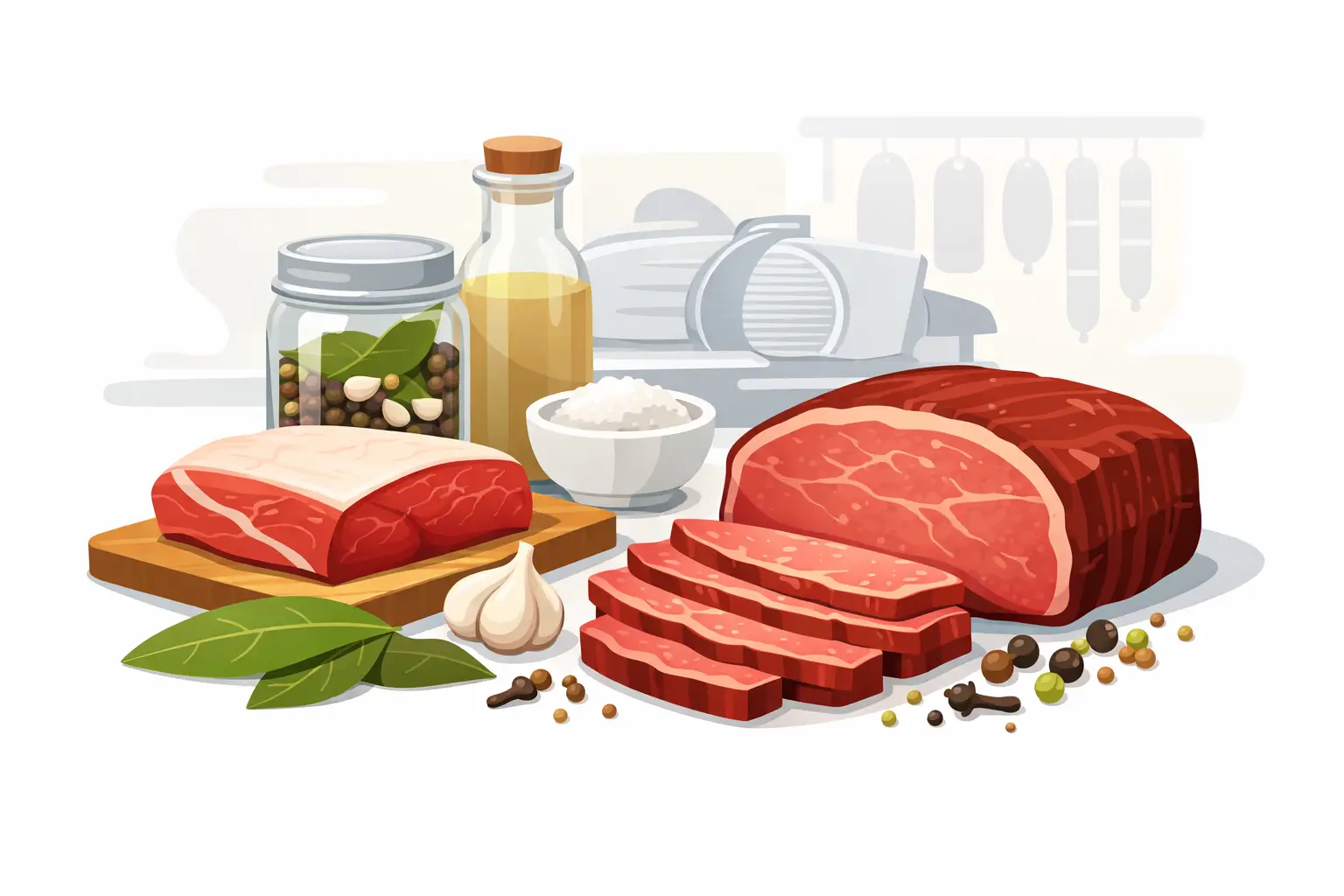
The meat is cured in a brine made primarily with water, salt, and curing salt. It is usually seasoned with a blend of pickling spices, which can include coriander, mustard seed, peppercorns, bay leaves, cloves, allspice, ginger, and sometimes garlic. Recipes vary from deli to deli, and that variation is a big reason corned beef can have such different personalities.
After curing, the brisket is simmered, steamed, or otherwise cooked gently until the connective tissue softens into silky gelatin. That is what gives good corned beef its tender texture. It should be substantial enough to slice and stack, yet soft enough that you do not have to wrestle with your sandwich.
Despite the name, corned beef does not contain corn. The word “corned” comes from the large grains, or “corns,” of salt once used to preserve meat. Before refrigeration was common, salting was a practical way to keep beef longer. Over time, it became something much better than practical: a deli classic.
The Beef: Usually Brisket, Sometimes Round
Brisket is the traditional favorite because its fat and connective tissue hold up beautifully through curing and long cooking. A point brisket is generally fattier and richer, while a flat brisket is leaner and slices more uniformly. Many people love the extra flavor of a fattier cut, especially in a hot sandwich.
Some corned beef is made from round, a leaner cut from the rear leg. It can be tender when handled well, but it will not have the same rich mouthfeel as brisket. Neither choice is automatically right or wrong. It depends on whether you want lean, clean slices or the full, juicy deli experience.
At a serious deli counter, the real test is not just the cut. It is the balance. The meat should have beef flavor first, a clear cured savoriness, and enough fat to stay moist without leaving the sandwich greasy.
The Brine Is Where the Flavor Starts
Curing is not the same as simply seasoning meat before cooking it. During curing, the salt brine works its way into the beef over several days. Salt seasons the meat throughout, helps preserve it, and changes the texture slightly so the finished brisket is firmer and more sliceable than an ordinary pot roast.
Curing salt, often containing sodium nitrite, is responsible for much of corned beef’s familiar rosy pink color. Without it, cooked beef would turn a more grayish-brown shade. Nitrite also helps create the characteristic cured flavor and serves an important food-safety role during the curing process.
That does not mean every corned beef tastes aggressively salty. A skilled cure brings enough salt to make the beef lively, then lets the spice blend and natural beefiness come through. If corned beef tastes harshly salty, flat, or chemical, the cure and cooking did not find their sweet spot.
Pickling spices provide the aroma people recognize before they even take a bite. Coriander brings a citrusy, earthy note. Mustard seed gives a little warmth. Peppercorns add bite. Clove and allspice can add subtle sweetness. Used with a careful hand, the spices support the beef rather than turning it into a spice cabinet.
Why Corned Beef Is Pink and So Tender
People often assume the pink color means corned beef is undercooked. It is not. Properly cooked corned beef is fully cooked, and its pink color comes from the curing process, not from rawness.
Tenderness comes later. Brisket contains collagen, a connective tissue that can feel tough when cooked quickly. Give it gentle heat and enough time, however, and that collagen breaks down. The result is meat that is juicy, tender, and ready for a big bite.
There is a fine line here. Undercooked corned beef can be tight and chewy. Overcooked corned beef can become dry, stringy, or crumbly. Even a great brisket needs careful timing, proper holding, and slicing across the grain. That last detail matters more than people think. Slicing against the grain shortens the muscle fibers, making every bite easier to chew.
Simmered, Steamed, or Both?
Home cooks often simmer corned beef in water after curing. That is a classic approach, and it can make an excellent dinner with cabbage, potatoes, and carrots. Deli-style corned beef may also be steamed after cooking or during reheating, which helps keep sliced meat moist and warm without beating it up.
The method changes the finished texture. Simmering can produce a softer, more traditional boiled-dinner feel. Steaming often gives deli corned beef a plush, juicy texture that is ideal for stacking on rye. The best choice depends on how the meat will be served.
For a sandwich, heat matters. Cold corned beef has its place, but warm corned beef releases more aroma and softens the fat just enough to make the meat feel richer. Put that on fresh rye with sharp mustard, and suddenly lunch has some authority.
Corned Beef vs. Pastrami: Same Family, Different Personality
Corned beef and pastrami are often mentioned together because both commonly start with cured beef and both belong in a great deli sandwich. But they are not the same thing.
Corned beef is cured and then generally boiled, simmered, or steamed. Pastrami is cured too, but it is usually coated with a bold pepper-and-coriander spice crust, then smoked before being steamed. That smoking step gives pastrami its darker exterior and its unmistakable smoky flavor.
Think of corned beef as savory, clean, and deeply beef-forward. Pastrami is louder: peppery, smoky, and more intensely spiced. If you want the straightforward comfort of cured brisket, corned beef is the move. If you want a smoky, spice-crusted sandwich with a little extra swagger, order pastrami.
Is Corned Beef the Same as Canned Corned Beef?
No. Both are cured beef products, but they are made and served differently. Deli corned beef is usually whole-muscle brisket or another substantial beef cut, cured and cooked before slicing. Canned corned beef is typically chopped or processed beef packed into a tin, often with a softer, more compact texture.
Canned corned beef can be useful for hash, breakfast skillets, and pantry meals. But it does not deliver the long, tender slices and hand-carved character people expect from a classic deli sandwich. Different foods, different jobs.
What to Look for in Great Corned Beef
Great corned beef should smell savory and spiced, not overly sour or salty. Its slices should be moist and tender, with visible grain and enough richness to feel satisfying. A little fat is flavor, especially in brisket, but thick, chewy seams should be trimmed or rendered down through proper cooking.
It should also be sliced to suit the sandwich. Slices that are too thick can feel tough. Slices shaved too thin can disappear into the bread. The sweet spot is a generous stack of tender slices that gives you a real mouthful of corned beef in every bite.
Bread and condiments should support the meat, not hide it. Rye offers a little tang and structure. Mustard adds sharpness. Swiss cheese brings creamy saltiness if that is your style. Sauerkraut and Russian dressing take the sandwich toward Reuben territory. There are plenty of good ways to build it, but the corned beef has to carry the show.
A proper corned beef sandwich is proof that simple food can still have standards. When the brisket is cured with care, cooked patiently, sliced right, and stacked high, you do not need much else. That is the kind of old-school deli satisfaction Bronx Deli is proud to put between two slices of rye.