

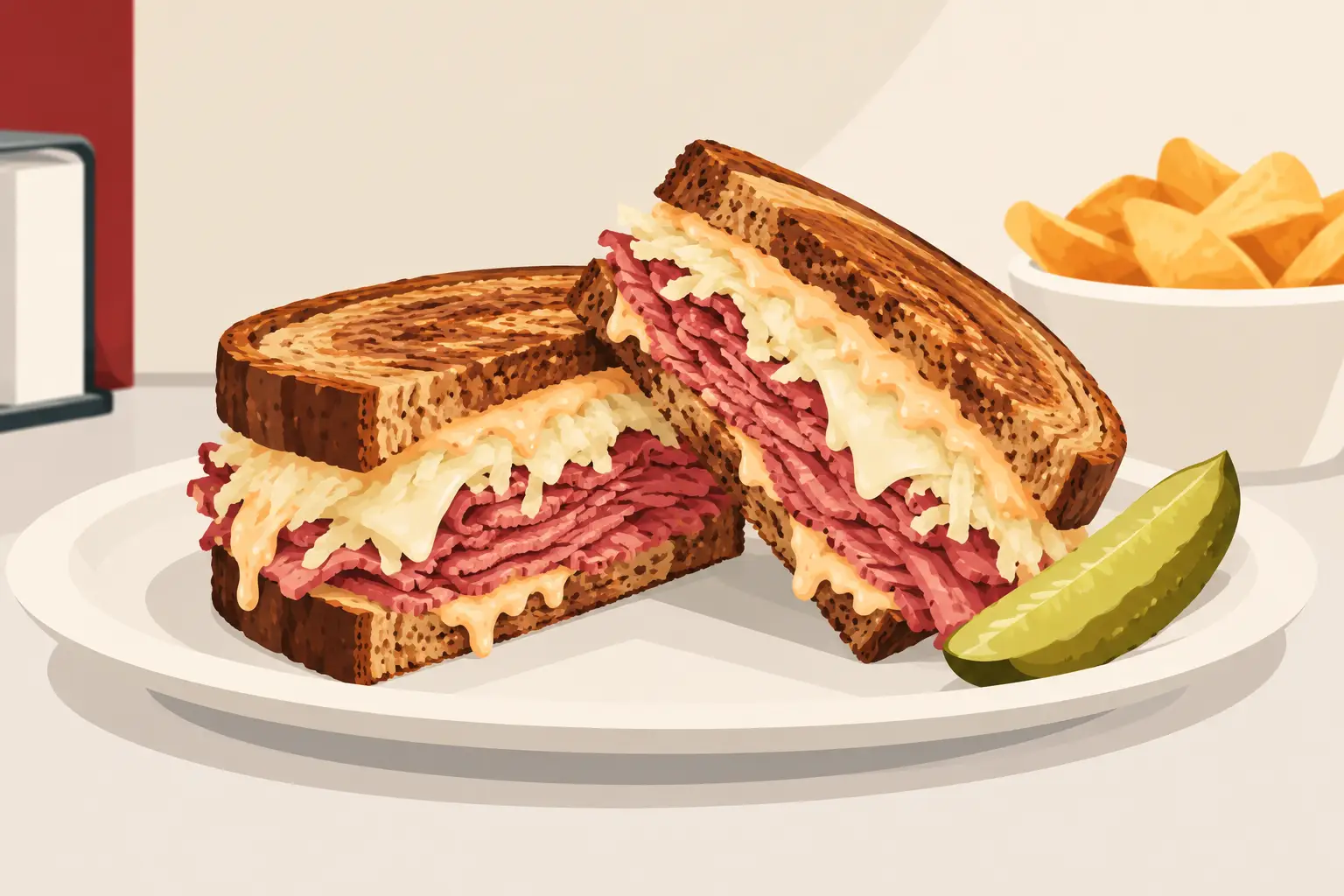
Some sandwiches fill you up. A great Reuben sandwich stops the table for a minute. It arrives hot, crisp at the edges, stacked high in the middle, with corned beef that is tender enough to bite cleanly and flavorful enough to carry every layer around it. That first bite should bring smoke, salt, tang, creaminess, and the unmistakable bite of rye together at once.
That is the beauty of a Reuben. It is not a quiet sandwich, and it should not try to be. Built right, it is classic deli food with a little attitude: generous, balanced, messy in the best possible way, and worth grabbing extra napkins for.
What Makes a Great Reuben Sandwich?
The Reuben has a short ingredient list, which means there is nowhere to hide. Corned beef, Swiss cheese, sauerkraut, Russian dressing, and rye bread are the traditional lineup. Each one has a job. Take away the tangy sauerkraut and the sandwich gets heavy. Skip the dressing and it loses its creamy zip. Use weak bread and the whole thing turns into a soggy situation before it hits the table.
The key is balance, not piling on ingredients just because you can. A Reuben should be big, sure, but every bite needs to hold together. You want enough corned beef to make it a real deli sandwich, enough Swiss to melt through the meat, and enough kraut to cut through the richness without taking over the show.
The griddle does its part, too. Rye bread needs a golden, buttery crunch that keeps the sandwich sturdy while adding a little toastiness to the mix. The cheese should be fully melted. The center should be hot. If the sandwich is cold in the middle, the magic is gone.
Corned Beef Is the Main Event
A Reuben is only as good as its corned beef. That is not deli poetry. It is the truth.
Great corned beef has to be properly seasoned, slow-cooked until tender, and sliced with enough care that it stays juicy rather than falling into dry shreds. It should have the deep, savory flavor that comes from time and a well-guarded recipe, not just salt and steam. Lean corned beef has its fans, while a little more marbling can bring extra richness. Neither choice is wrong, but the meat must be tender and full-flavored.
That is why a serious deli starts with the beef. At Bronx Deli, corned beef is the signature for a reason: it is the kind of old-school, home-cooked quality that gives a sandwich its reputation before the first slice of rye ever hits the grill.
Corned beef also needs to be hot when it meets the bread. Warm meat helps soften the Swiss into that perfect pull-apart layer and lets the seasoning mingle with the dressing. Cold corned beef can work on a sandwich, but a Reuben calls for heat. This is a sandwich that wants the griddle.
Sauerkraut, Swiss, and Dressing Keep It Honest
Sauerkraut does more than add a little crunch. Its acidity keeps the Reuben from becoming one long, rich bite. Good kraut tastes bright and lightly sour, with a clean fermented flavor. It should be drained well enough to avoid soaking the bread but not squeezed so dry that it loses its character.
Swiss cheese brings mild nuttiness and a smooth, melted texture. It is not supposed to overpower the corned beef. It is there to round out the sharper notes from the kraut and dressing. When it melts into the meat, it makes the whole sandwich feel more substantial without making it feel heavier.
Then there is Russian dressing. The exact recipe can vary from deli to deli, and that is part of the fun. Some versions lean sweeter, some have more spice, and some bring a little extra pickle tang. What matters is that it has enough personality to cut through the beef while tying everything together. Too much dressing can swamp the rye. Too little leaves the sandwich dry. Like everything else on a Reuben, it is a matter of proportion.
Rye Bread Has a Tough Job
Rye bread is not an afterthought or merely a delivery system. It has to stand up to hot corned beef, melted cheese, sauerkraut, and dressing without splitting apart halfway through lunch. At the same time, it needs its own flavor: earthy, lightly tangy, and distinctly rye.
Seeded rye adds extra aroma and crunch. Unseeded rye gives a smoother bite. The better pick depends on personal taste, but both can make a fine Reuben when they are fresh and properly grilled. What does not work is bread that is too soft, too thick, or too dry. A Reuben should hold firm in your hands while still yielding easily when you bite in.
The buttered griddle finish is where bread earns its place. That crisp outside keeps the interior from going soft too fast, while the warmth brings the whole sandwich together. You should hear a little crunch before the corned beef takes over.
The Reuben Is Big, but It Should Not Be Confusing
A sandwich this rich is best when it stays focused. There is a temptation to treat a Reuben like a blank canvas for every extra topping in the kitchen. Pickles on the side? Absolutely. A handful of fries? No argument there. But inside the sandwich, restraint wins.
Pastrami can make a terrific variation, and turkey Reubens have earned their place for diners who want something lighter. Coleslaw sometimes steps in for sauerkraut, especially in regional riffs. Those are valid choices, but they are variations, not the classic formula. When the craving is for a traditional Reuben, corned beef, kraut, Swiss, dressing, and rye are the reason you ordered it.
That classic formula is also why the sandwich works for both lunch and dinner. It is hearty enough to handle a serious appetite, but it does not need a special occasion. It works after a long morning at the office, during a casual family meal, or when dinner needs to taste like somebody put real thought into it.
A Reuben Has a History Worth Debating
The Reuben’s origin story is famously disputed. Omaha and New York both have strong claims, with competing stories involving hotel kitchens, poker games, and deli culture. Like many beloved American foods, the exact beginning is less settled than the sandwich itself.
What is clear is why it lasted. The Reuben takes familiar deli ingredients and puts them in exactly the right conversation. Salty corned beef needs tang. Tang needs creaminess. Creaminess needs rye’s bite and a hot griddle crust to keep everything grounded. It is a smart sandwich disguised as a very generous lunch.
Ordering a Reuben Sandwich Your Way
There is no wrong way to enjoy a Reuben, but a few choices can make the experience better. If you are carrying it out or having it delivered, eat it while it is still warm if you can. That is when the bread is crispest and the Swiss is at its best. If you have to wait, a quick warm-up in a skillet or oven will treat it far better than a microwave, which can soften the rye.
For a bigger appetite, pair it with a deli side that offers contrast. A crisp pickle brings more snap. Coleslaw adds coolness. Fries turn the meal into a full-on comfort-food move. If you are feeding a group, sandwiches with strong personalities like the Reuben make catering easier because people know exactly what they are getting: the real deal, not a forgettable boxed lunch.
And if you are the kind of person who saves half for later, keep the components as dry as possible and reheat it on a skillet. The sandwich will still be good, but fresh off the griddle is where it earns its legend.
A Reuben does not need fancy presentation or a long explanation. It needs great corned beef, a hot grill, and the confidence to be exactly what it is: a big, bold deli classic. Order one when you want lunch to feel like a proper meal, then make room for the napkins.