

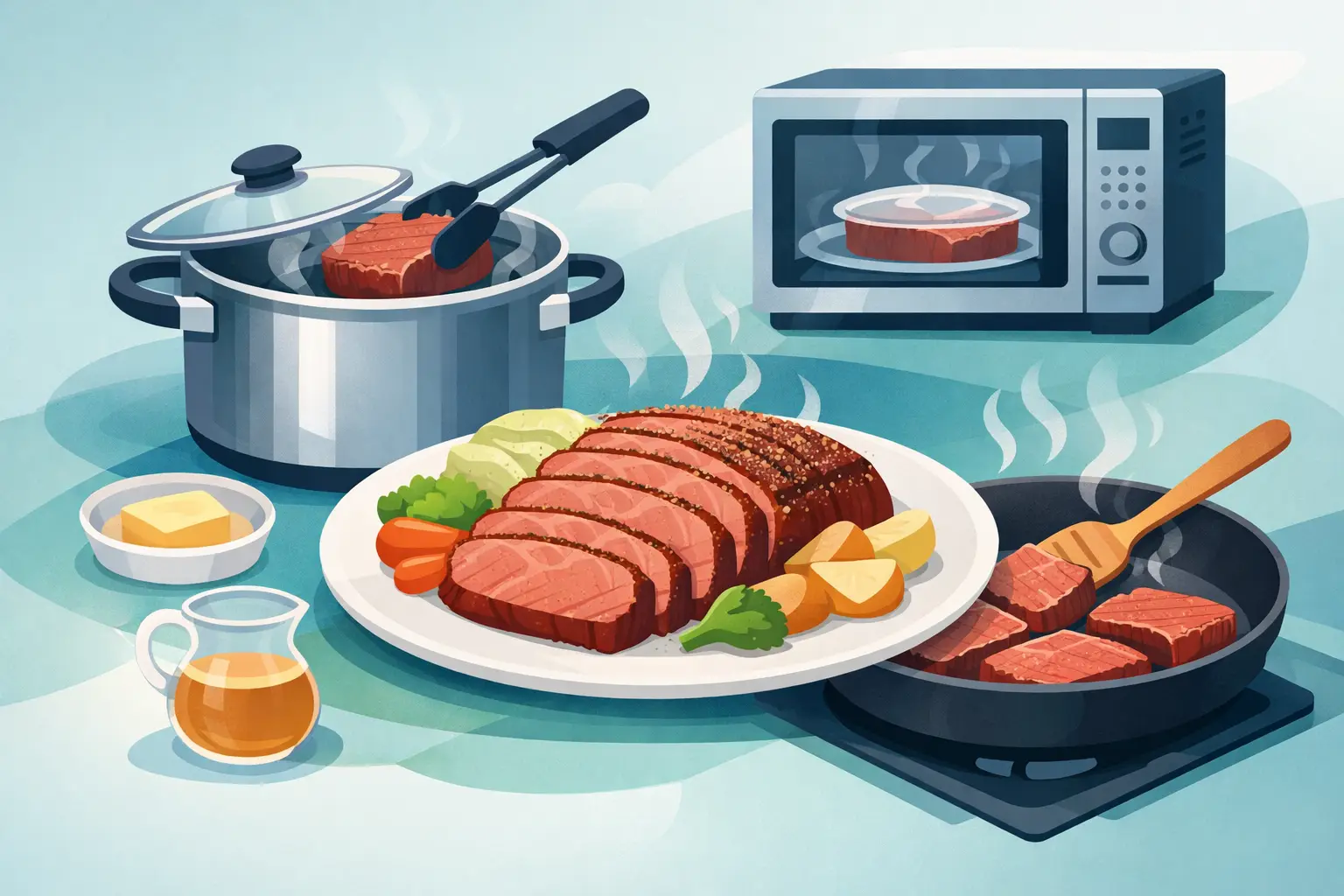
That leftover corned beef in the fridge deserves better than a blast of high heat and a chewy, dried-out ending. Knowing how to reheat corned beef comes down to one deli rule: warm it gently, add a little moisture, and keep it covered whenever you can. Do that, and yesterday’s sandwich meat can still deliver the tender, juicy bite you were looking forward to.
Corned beef is already cooked, so the goal is not to cook it again. You are simply bringing it back to serving temperature without squeezing out the fat and moisture that make each slice rich and flavorful. The best method depends on whether you have thin slices for sandwiches, a thick chunk of meat, or a full cooked brisket.
The Golden Rule for Reheating Corned Beef
Low heat and moisture are the answer. Corned beef has connective tissue, fat, and a cured texture that hold up beautifully when warmed slowly. High heat changes that fast. It tightens the meat fibers, turns delicate slices tough around the edges, and leaves you reaching for mustard just to add back some moisture.
For most leftovers, aim for an internal temperature of 165°F if you are reheating from the refrigerator. A splash of water, broth, beer, or even the cooking juices from the original meal helps create gentle steam. Covering the pan or dish keeps that steam where it belongs: around the meat.
If your corned beef was sliced against the grain before it went into the fridge, keep it that way. Slicing against the grain shortens the muscle fibers, making every bite easier to chew. A beautiful pile of thin-cut corned beef can become a serious sandwich again with only a few minutes of careful reheating.
How to Reheat Corned Beef in the Oven
The oven is the best choice for a larger piece of corned beef or enough slices to feed the family. It takes longer than the microwave, but it gives you the most even result with the least risk of drying out the meat.
Set the oven to 300°F. Place the corned beef in a baking dish and add a few tablespoons of water, beef broth, or reserved cooking liquid to the bottom. Cover the dish tightly with foil. A whole piece or thick chunk may need 20 to 30 minutes, while sliced corned beef usually needs 10 to 15 minutes.
Check it near the end rather than setting a timer and forgetting about it. When the meat is hot through the center, pull it out. Let a larger piece rest for five minutes before slicing. That short rest gives the juices a chance to settle instead of running straight onto the cutting board.
For sandwich slices, you can layer the meat loosely rather than packing it into a dense brick. The steam will move between the slices, warming them evenly. This is the move when you want a hot corned beef sandwich with tender meat from edge to edge.
A Note on Foil
Tight foil matters. A loose cover lets steam escape, which defeats the purpose of adding liquid. If you are reheating a lot of corned beef, use a baking dish with a fitted lid or seal the foil around the edges well.
Reheat Corned Beef on the Stovetop for Sandwiches
A covered skillet is a fast, dependable option for a few sandwich portions. Add a small splash of water or broth to a skillet over low to medium-low heat. Lay the corned beef slices in the pan, cover, and heat for two to four minutes.
Turn the slices once if they are thick or stacked. You want them warmed through, not sizzling hard. If the liquid cooks away before the meat is hot, add another spoonful. The pan should stay steamy, not dry.
This method is especially good when the rest of lunch is moving at the same time. Toast the rye, put out the mustard, pile on the corned beef, and you have a proper deli-style meal without firing up the oven. Add Swiss cheese and sauerkraut if a Reuben is calling your name, then let the hot meat do some of the melting before the sandwich hits the griddle.
The Best Way to Steam Corned Beef
Steaming is the deli-counter favorite for a reason. It warms sliced corned beef while protecting its texture, and it is hard to overdo if you keep an eye on it. You do not need a restaurant steamer to make it happen at home.
Bring an inch or two of water to a light simmer in a pot. Set a steamer basket, metal colander, or heat-safe rack over the water so the meat does not sit directly in it. Add the corned beef in loose layers, cover tightly, and steam for three to six minutes depending on thickness.
No basket? Put the slices in a heat-safe bowl inside a larger covered pot, with a little water in the bottom of the pot. The idea is to let hot steam surround the corned beef without boiling it. Boiling can wash away flavor and leave thin slices ragged.
Steamed corned beef is ideal for a tall sandwich. The slices stay soft, hot, and ready to stack high. How’d ya get so lucky? You planned for leftovers.
Can You Reheat Corned Beef in the Microwave?
Absolutely, but the microwave asks for a little discipline. It is the quickest choice for one serving, especially on a busy workday, but it can create tough edges if you run it too long.
Place a few slices in a microwave-safe dish with a teaspoon or two of water or broth. Cover the dish with a microwave-safe lid or a damp paper towel. Heat at 50 percent power for 30 seconds, then check and rearrange the slices. Continue in 15- to 30-second bursts until hot.
Using half power is the difference-maker. Full power heats too aggressively, particularly with thin slices. A damp paper towel helps hold in moisture, while short intervals stop you from discovering that your lunch went from cold to overcooked in one minute.
For a thicker piece, microwave in short intervals and turn it between rounds. If you have time, the oven will give you a better result. But for a quick lunch that still tastes like lunch, not compromise, the microwave gets the job done.
Reheating a Whole Corned Beef Brisket
A whole cooked brisket needs more patience because the center takes time to warm. Preheat the oven to 300°F and place the meat in a roasting pan or deep baking dish. Add about 1/4 inch of water, broth, or cooking liquid, then cover the pan tightly.
Plan on roughly 20 to 30 minutes per pound, though the exact time depends on how cold and thick the brisket is. Start checking the internal temperature before the estimated finish time. Once it reaches 165°F, let it rest briefly and slice against the grain.
Do not crank up the oven because dinner is waiting. A higher temperature may get the center hot sooner, but it can dry out the outside before the middle catches up. Slow and covered wins this one every time.
Mistakes That Make Corned Beef Tough
The most common mistake is reheating uncovered. Whether you use the oven, skillet, or microwave, exposed corned beef loses moisture quickly. The second is adding too much heat. Corned beef is not a steak you are trying to sear. Gentle warmth preserves the tender texture you paid for.
Another mistake is reheating more than you need. Warm only the slices or portion you plan to eat, then keep the rest chilled. Repeated heating and cooling affects quality, and it makes food safety harder to manage. Refrigerate leftovers within two hours, store them in a sealed container, and use them within three to four days.
If the meat seems a little dry before reheating, do not panic. Add broth and use the covered oven or steam method. You can also tuck it into a sandwich with mustard, Russian dressing, coleslaw, or sauerkraut, but the meat should still be warmed with care first.
Make the Leftovers Worth It
A great reheat is not only for sandwiches, although a mile-high corned beef on rye is never the wrong answer. Chop warmed corned beef into hash with potatoes and onions, fold it into eggs, or serve it alongside cabbage and roasted potatoes. The key is to add it near the end whenever possible, so it warms without taking a second trip through the overcooking zone.
When the craving calls for the real deal, Bronx Deli knows that signature corned beef is not meant to be timid. Reheat your leftovers low, moist, and covered, then stack that sandwich like you mean it.