

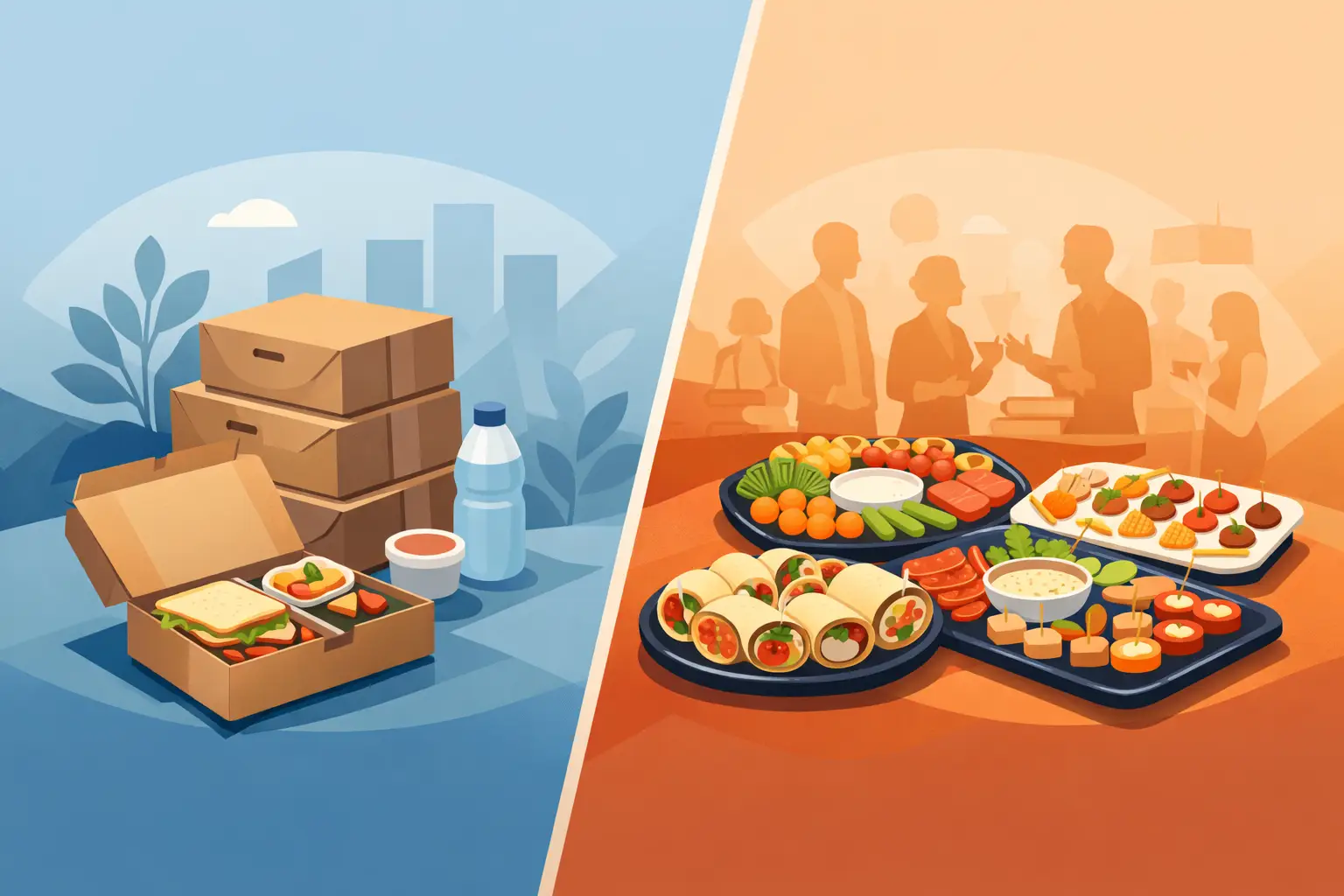
A meeting is set for noon. Half the room has to get back to work by 12:45, one guest is avoiding meat, and somebody is already asking whether there will be corned beef. That is when boxed lunches versus platters stops being a small catering detail and becomes the decision that shapes the whole meal.
Both options can feed a crowd well. The better choice depends on how your group will eat, how much time you have, and whether the occasion calls for an individual meal or a table full of classic deli abundance. Here is how to make the call without overthinking it.
Start With How the Group Will Eat
The fastest way to choose is to picture the first five minutes after the food arrives. Will guests grab a meal and head into a training session? Are they eating in shifts? Is this an open house where people will mingle, make a plate, and come back for seconds? The serving style should match the rhythm of the event.
Boxed lunches are built for movement and timing. Each guest receives a prepared meal, usually with a sandwich, side, and something sweet. There is no line at the food table, no guessing about portions, and far less handling once the boxes are set out. For office lunches, bus trips, volunteer crews, and meetings with a tight agenda, that convenience matters.
Platters create a different kind of moment. Sandwich trays, deli meat trays, sides, and desserts turn lunch into something shared. Guests can see the spread, choose what sounds good, and build a plate around their appetite. It feels generous because it is generous. A platter setup is right at home at family gatherings, graduation parties, showers, team celebrations, and any event where people are expected to relax a little.
When Boxed Lunches Win
A boxed lunch is the practical choice when you need a clean handoff from caterer to guest. It keeps the order organized, especially when people have different sandwich preferences or dietary needs. Instead of trying to remember who requested turkey, who wanted a vegetarian option, and who skipped mayo, you can label each meal and let everyone grab the right one.
They also help you control portions and budget. You know exactly how many meals are being served, and every person gets the same complete experience. That makes boxes especially useful for professional settings where the host needs an easy per-person count for approvals, reimbursements, or a set event budget.
Best occasions for individual boxes
Think boxed lunches for board meetings, client presentations, staff trainings, school functions, construction crews, medical office lunches, and any gathering where food needs to be easy to distribute. They are also a smart move for outdoor events when seating is limited. A guest can eat one on a park bench, in a vehicle, or between activities without balancing a plate from a crowded buffet table.
There is one trade-off: individual meals can feel more structured than festive. If your whole goal is to let people linger over a big spread of sandwiches and sides, a box may be a little too buttoned-up. That is not a problem. It is simply a sign that platters may fit the occasion better.
When Platters Make the Table
Platters are for groups that want options in front of them. A well-built deli spread has visual pull: stacked sandwiches, colorful sides, pickles, chips, cookies, and the kind of food that gets people gathered around the table before the first plate is made.
They are particularly useful when appetites will vary. Some guests may want half a sandwich and extra pasta salad. Others may be ready for a Big Mouth-sized lunch. With platters, the group can serve itself according to hunger rather than being locked into one preset meal.
Platters can also stretch beautifully for casual events. Not everyone arrives at once at a birthday party, office open house, or family celebration. A spread lets early guests eat while late arrivals still have choices. Add extra sides and desserts, and the table stays welcoming instead of looking picked over after the first rush.
The platter advantage: variety
The best platter orders give guests a reason to come back for another look. Mix familiar favorites with a few bold choices. Turkey and ham keep things easy, while corned beef brings the old-school deli confidence. Include a vegetarian option when needed, plus sides that do more than fill space. Potato salad, pasta salad, coleslaw, chips, and sweets all help turn sandwiches into a real meal.
At Bronx Deli, that means a crowd gets a taste of the recipes mastered over generations, including the corned beef that food critics across the country have praised. If you are feeding Metro Detroit guests who know a good deli sandwich when they see one, a plain lunch will not do. Give them the good stuff.
The trade-off is that platters require a little more planning at the table. You need serving space, plates, napkins, and enough room for guests to move through without forming a traffic jam. For a small conference room with a 30-minute lunch break, that can be more trouble than it is worth. For a relaxed party, it is part of the fun.
Boxed Lunches Versus Platters: The Budget Question
Neither option is automatically the cheaper choice. It depends on the menu, serving size, and how accurately you can predict attendance.
Boxed lunches make spending simple because the price is tied directly to the guest count. If 25 people are attending, you order 25 meals. There is less concern about running short, but there may be some waste if several people do not show up or leave their lunch untouched.
Platters may offer more flexibility for a group that will graze or for an event with uncertain attendance. But do not underorder just because a platter looks plentiful. A room full of hungry adults can clear a sandwich tray fast, especially when the food is worth talking about. Be honest about your crowd. A sales team after a morning of presentations, a youth sports group, and a baby shower will not eat the same way.
When placing a platter order, share the event type, number of guests, serving time, and whether the food is the main meal or one part of a larger spread. Those details help a catering team recommend quantities that feel abundant without sending you home with enough leftovers to feed the block.
Do Not Treat Dietary Needs as an Afterthought
Whether you choose boxes or platters, ask about dietary needs before you order. Vegetarian guests, people avoiding certain ingredients, and those with food allergies should not have to figure it out at the table with a hungry crowd behind them.
Boxes make special requests easier to identify and distribute. With platters, it helps to keep specialty items separate and clearly labeled. The point is not to make the menu complicated. It is to make every guest feel like somebody thought ahead.
Also consider the setting. If you are serving outdoors in warm weather or holding food for a long afternoon, ask about delivery timing and the best way to keep cold items properly chilled. Great deli food deserves better than sitting in the sun next to a folding chair.
Make the Choice That Fits the Occasion
Choose boxed lunches when speed, individual preferences, clean distribution, and a predictable per-person plan matter most. Choose platters when variety, sharing, and a big welcoming table are part of the experience you want to create.
And if your event has both needs, do not be afraid to combine them. Individual boxes can handle the core lunch for a working group, while a dessert or sandwich platter adds something extra for guests to share. A family gathering might use platters for the main table and a few specialty boxed meals for guests with specific dietary requests.
The best catered meal is not the one with the fanciest label. It is the one that arrives on time, feeds everybody well, and leaves the room asking, “How’d ya get so lucky?”