

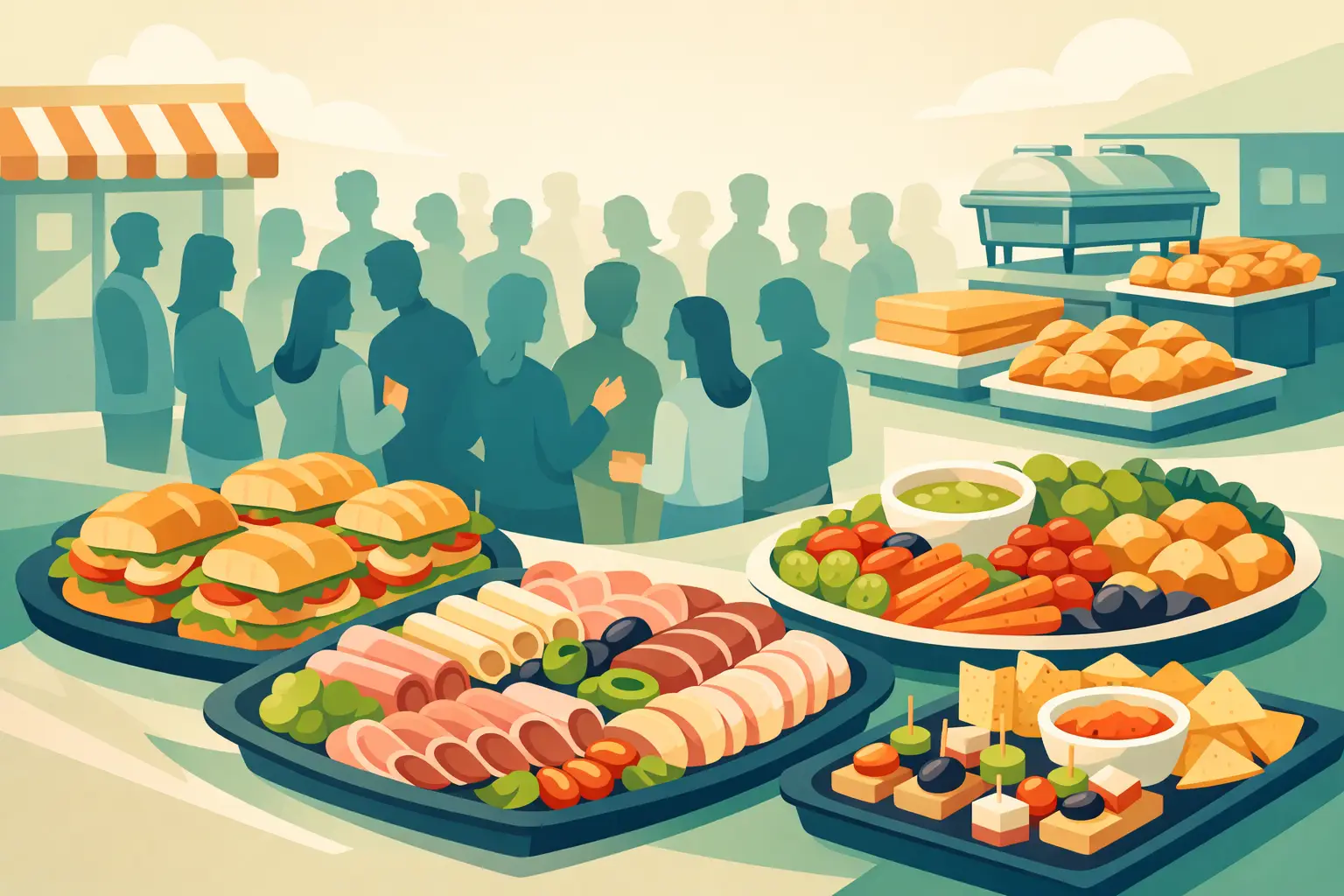
A catered lunch can make a meeting feel like a win before anyone opens a laptop. But a tray of food that runs short, arrives too late, or leaves half the room without a good option can turn an easy plan into a long afternoon. Knowing how to order deli catering means getting the crowd fed with the kind of generous, familiar food people actually look forward to.
The good news: you do not need to be an event planner to pull it off. Start with a realistic headcount, choose food that fits the occasion, give the deli enough notice, and make the details clear. Then let the corned beef, piled-high sandwiches, sides, and sweets do the heavy lifting.
Start With the Real Guest Count
Your guest count drives nearly every catering decision: how much food to order, how many serving pieces you need, whether delivery makes sense, and what your budget looks like. Ask for a firm RSVP count when you can. For an office lunch, count the people expected to be in the building, not just the people who clicked “maybe” on an invite.
Still, people bring appetites and plans change. For most casual events, ordering for about 5 to 10 percent more guests is a smart move. That cushion matters most when food is the main event, when the guest list includes teenagers, or when your group knows a great corned beef sandwich is on the table.
Timing affects portions, too. A 12:30 p.m. lunch usually calls for a full meal. A 3:00 p.m. open house may need lighter sandwich selections and snacks because guests will arrive and leave in waves. If you are serving food alongside pizza, barbecue, or a potluck, you can scale back. If deli catering is the only meal, do not cut it close.
How to Order Deli Catering for Your Event
Before you start building an order, answer four basic questions: When is the event? How many people are eating? Is this a meal or a snack? Will guests serve themselves or receive individually packed meals?
Those answers tell the catering team what format makes the most sense. Sandwich platters are a natural fit for team lunches, family gatherings, showers, and game days. Boxed lunches work well when people need to grab food quickly, eat at their desks, or take meals on the road. Hot trays and larger spreads can make more sense for an evening party or a community event where guests will settle in and eat.
Be specific about the service time, not just the event start time. If a meeting begins at noon and lunch is planned for 12:30, say so. If guests are expected to arrive from 5:00 to 6:00, explain that it is an open-house setup. Clear timing helps the kitchen prepare food for the moment it will be served, not for an hour before or after.
Choose a Menu With Built-In Variety
A great deli order has a center of gravity. For some groups, that is a classic sandwich platter loaded with favorites. For others, it is a hot meal with deli sides. Either way, give guests enough choice without turning the order into a guessing game.
A dependable group menu usually includes a few familiar meats, a vegetarian choice, fresh bread or rolls, and sides that make the meal feel complete. Corned beef is the move when you want the meal to feel like a real New York-style deli lunch, especially for guests who appreciate the good stuff. Pair bolder sandwiches with lighter options so everyone has a lane.
Do not forget the finishing pieces. Pickles, condiments, chips, pasta salad, potato salad, coleslaw, cookies, and beverages can be the difference between “there was food” and “that lunch was fantastic.” If the event runs longer than an hour, extra drinks and a dessert tray are usually money well spent.
Ask About Dietary Needs Early
You do not need to create a separate meal for every guest, but you should know about major dietary needs before placing the order. Ask attendees whether they need vegetarian, vegan, gluten-conscious, dairy-free, or allergy-aware options. Then share that information with the deli while there is still time to plan.
Be direct about allergies. A preference and a serious allergy are not the same thing, and the catering team needs that distinction. Ask how food is prepared, packaged, and labeled if cross-contact is a concern. It depends on the item and the kitchen, so never assume a dish is safe simply because it does not appear to contain an ingredient.
For office orders, labeling is especially helpful. Clearly marked vegetarian meals and individually labeled boxed lunches keep the line moving and prevent the awkward “Who ordered this?” shuffle around the conference table.
Get Portions Right Without Ordering the Entire Menu
The right amount depends on the format. Individually packaged lunches make portion planning simple because each guest receives a complete meal. Platters require a little more judgment, particularly when you are mixing sandwiches, sides, and desserts.
When you order trays for a main meal, plan on enough sandwich portions for each guest, plus a little breathing room for the big eaters and the person who comes back for “just one more half.” Add substantial sides if you want the spread to stand on its own. If sandwiches are only part of a larger buffet, you can reduce the count and let the other dishes carry some of the meal.
Do not confuse a tasting portion with a lunch portion. A small side may be enough at a reception with several food stations, but it will not satisfy a room full of employees who skipped breakfast. Tell the caterer what else is being served. That one detail can change the recommendation considerably.
Place the Order Early and Confirm the Details
The earlier you order, the more choices you are likely to have, especially for larger groups, weekend events, holidays, and popular lunch hours. A small, straightforward pickup order may be possible with short notice. A large spread with special requests deserves more runway.
When you place the order, confirm the date, service time, guest count, menu, dietary accommodations, pickup or delivery method, payment, and a day-of contact number. If delivery is involved, provide the full address, building entrance, floor or suite number, parking instructions, and any security or reception procedures.
A quick confirmation the day before is worth the call or message. Check the final headcount, make sure the event time has not shifted, and remind the team of any must-have details, such as labeled meals, utensils, plates, napkins, serving tongs, or chafing setup for hot food.
Pick Up or Delivery? Choose What Protects the Meal
Pickup gives you more control over timing and can be a good choice for smaller orders when someone can head straight to the event. Make sure the vehicle has a flat, clean place for trays, and assign one person to handle the pickup. Putting a stack of sandwiches on a passenger seat is not a catering strategy.
Delivery is often the better call for larger orders, busy office lunches, or events where the host needs to be greeting guests instead of carrying trays through a parking lot. Schedule delivery early enough to allow for setup, but not so early that hot food sits around longer than it should.
Have a table ready before the food arrives. Set out plates, napkins, utensils, condiments, and beverages first. Keep cold items cold, follow the deli’s reheating or holding instructions for hot items, and put sandwiches out in manageable batches if people will be eating over several hours.
Make the Food Part of the Welcome
Deli catering works because it feels generous without feeling fussy. People know what to do with a stacked sandwich, crisp pickle, and a scoop of potato salad. That comfort is exactly what makes it right for birthdays, retirements, office milestones, family get-togethers, and community events.
If you are feeding a group in Pontiac or Metro Detroit, Bronx Deli brings the home-cooked recipes, award-winning corned beef, and Big Mouth Sandwich energy that turn a practical order into a meal people talk about afterward. Give your caterer a clear count, an honest picture of the occasion, and enough notice to do it right. Then enjoy the rare host moment when the only question in the room is, “Who’s going back for seconds?”