

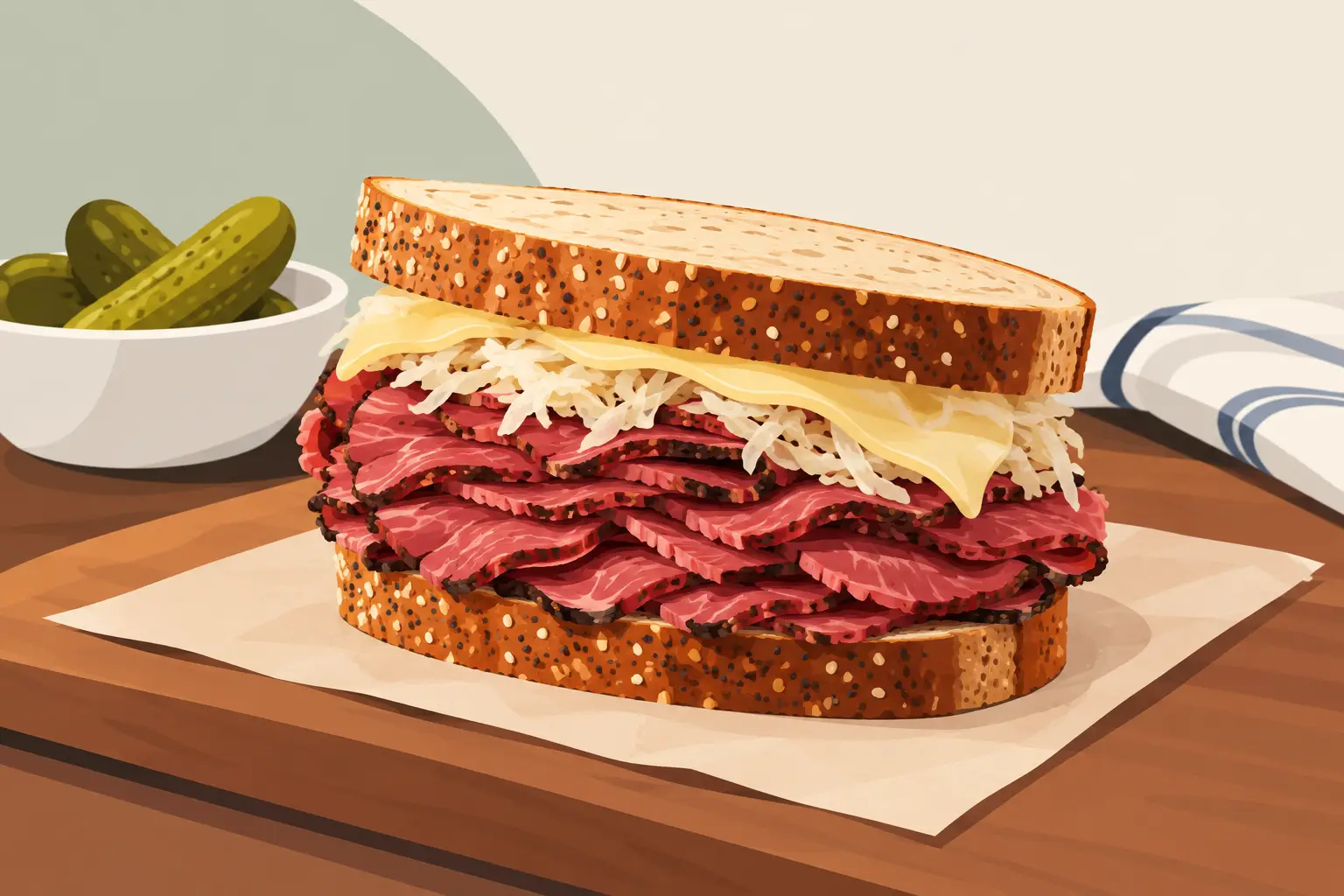
A pastrami sandwich should not need a sales pitch after the first bite. The pepper hits first, then the deep, smoky richness of the meat, then the sharp little lift of mustard and rye. It is a tall order for two slices of bread, which is exactly why a great deli sandwich feels like luck on a lunch break. How’d ya get so lucky?
What Makes a Pastrami Sandwich Worth Ordering
Pastrami starts with beef that has been cured, seasoned, smoked, and steamed until it is tender enough to pull apart with a bite but sturdy enough to hold its place in a serious sandwich. That process is why pastrami has more than one note. It is salty, yes, but it should also be peppery, savory, smoky, and rich without becoming greasy or dull.
The cut matters, too. Brisket pastrami often brings a fuller, fattier bite. Leaner cuts can be excellent when prepared carefully, but they need enough moisture and tenderness to avoid eating like deli meat from a plastic package. The best slices are warm, hand-cut or sliced generously, and stacked with confidence. A pastrami sandwich is not the place for a timid portion.
Then there is the texture. The outside edges should carry a little spice and smoke. The center should stay juicy. If the meat is dry, cold, or sliced paper-thin, no amount of mustard can rescue it. Great pastrami earns its place at the center of the plate.
The difference between pastrami and corned beef
Pastrami and corned beef are family, not twins. Both are cured beef deli classics, and both belong on rye with mustard when the craving calls. Corned beef is typically cured and cooked until tender, with a clean, salty, beef-forward flavor. Pastrami goes a step further with a bold spice coating, smoking, and steaming that give it its darker color and signature bark.
Which one is better depends on the mood. Corned beef is the move when you want that straightforward, old-school deli flavor. Pastrami is for the days when you want a little more smoke, pepper, and attitude. A deli that takes its corned beef seriously understands the standard: the meat has to be the reason you came in.
Rye Bread Has a Real Job to Do
A soft white roll can carry plenty of sandwiches, but pastrami deserves rye. Its tang and gentle caraway flavor cut through the richness of the meat rather than disappearing underneath it. The bread should be fresh, resilient, and soft enough to bite through without sending the whole stack sliding onto your plate.
Seeded rye or unseeded rye both work. Seeded rye gives the sandwich a more traditional deli profile, while unseeded rye lets the pastrami take the lead. There is no wrong choice, as long as the bread is not stale, overly sweet, or so thick that it turns lunch into a jaw workout.
Toasting is another matter of preference. Lightly toasted rye adds structure and warmth, especially for takeout. But toast it too hard and it scrapes away the tender, juicy experience a proper pastrami sandwich needs. The goal is support, not crunch for crunch’s sake.
Mustard, Pickles, and Knowing When to Stop
Yellow mustard is classic for a reason. It is bright, sharp, and strong enough to balance rich meat without burying the flavor. Spicy brown mustard brings more texture and a bigger kick. Deli mustard works beautifully when you want something a little deeper and less acidic.
The key is restraint. Pastrami has spent plenty of time developing flavor before it reaches the counter. A heavy swipe of mayonnaise or a pile of sugary sauce can turn a proud deli sandwich into something unrecognizable. Mustard should wake up the bite, not take it over.
A crisp pickle on the side does the same job. Its cold snap and vinegar cut through the warmth and richness of the meat between bites. Coleslaw can work, especially if you like a creamy counterpoint, but it changes the sandwich’s balance. Sauerkraut adds tang and makes sense for anyone chasing a Reuben-style direction, though that is a different kind of meal altogether.
Cheese is where tradition and personal taste part ways. Swiss can be good, particularly with sauerkraut and dressing, but a straightforward pastrami-and-mustard sandwich does not need it. If you add too many toppings, you may end up tasting everything except the pastrami.
Why Hot Pastrami Changes the Whole Meal
Temperature is not a small detail. Hot pastrami releases its aroma, softens its fat just enough, and makes every spice feel more alive. A cold sandwich can be convenient, but warm meat on fresh rye is the deli-counter experience people remember.
That matters even more for carryout and delivery. If the sandwich is packed too tightly while piping hot, steam can soften the bread. If it travels too long, the meat can lose its magic. The smart play is to eat it soon after it arrives, keep wet toppings separate when possible, and give the sandwich a minute to settle before the first bite. That brief wait can save your shirt and keep the stack together.
For an office lunch, ordering sandwiches with pickles and sides packed separately keeps the bread in better shape. For a family meal, a build-your-own setup can be the answer: warm sliced meat, rye, mustard, pickles, slaw, and plenty of napkins on the table. Everybody gets the ratio they want, and nobody has to argue over seeds in the rye.
The Best Sides for a Big Deli Lunch
A pastrami sandwich can stand on its own, but the right side turns it into the kind of lunch that keeps you full through the afternoon. Potato salad brings a cool, creamy contrast. Coleslaw adds crunch and tang. Fries make it a bigger, more casual meal, while a cup of soup gives the whole order that classic deli-counter comfort.
If you are feeding a group, variety beats duplication. Some people want extra pickles, some want fries, and somebody always wants soup. Mix the sides, add a few extra napkins, and plan for sandwiches that are bigger than expected. That is not overdoing it. That is understanding the assignment.
A cold soda, iced tea, or a beer if you are dining in can also reset the palate between rich bites. The best pairing is the one that keeps the meal satisfying without competing with the meat.
Order Like You Mean It
The beauty of a deli sandwich is that you can make it your own without making it complicated. Start with the basics: warm pastrami, rye, and mustard. From there, decide whether you want seeded bread, spicy brown mustard, extra pickles, slaw, or a side that turns lunch into dinner.
If this is your first time ordering pastrami, go traditional before adding every possible extra. You will learn what the meat, bread, and mustard are doing together. Next time, you can make it hotter, tangier, messier, or bigger. That is part of the fun.
At Bronx Deli, generations of home-cooked deli know-how set a high bar for every big, satisfying bite. Whether you are grabbing lunch between meetings, picking up dinner for the family, or planning food for a crowd, do not settle for a sandwich that disappears in three bites. Order the one that makes you pause, reach for a pickle, and wonder why you did not get an extra side.