

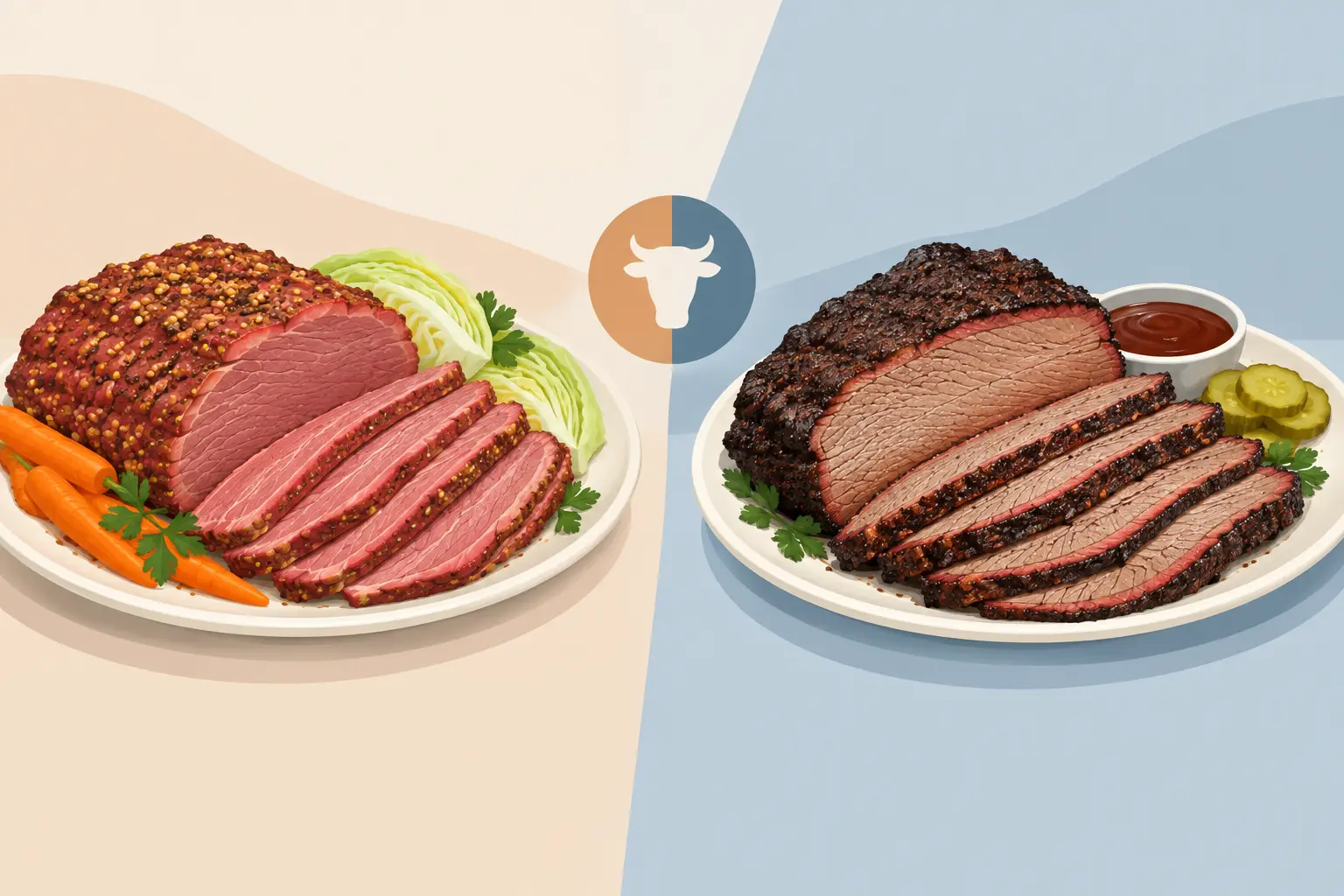
A towering deli sandwich is no place for guesswork. When people compare corned beef versus brisket, they are often talking about the same part of the cow – but not the same finished meat. One is defined by its cut. The other is defined by its cure, seasoning, and cooking method. That difference is exactly why corned beef brings the bold, salty, tender flavor people expect from a real New York-style deli.
Corned Beef Versus Brisket Starts With the Cut
Brisket is a cut of beef from the lower chest of the animal. Since this area works hard, it contains plenty of connective tissue and needs time to become tender. A raw brisket is usually divided into two sections: the leaner flat and the richer, fattier point.
That is the first thing to know: brisket is simply beef before it is cured, smoked, braised, or otherwise prepared. It can become barbecue brisket, pot roast-style brisket, pastrami, or corned beef. The cut gives cooks a lot of possibilities.
Corned beef is most often made from brisket, especially the flat cut. Before cooking, the meat is cured in a seasoned salt brine. The word “corned” has nothing to do with corn on the cob. It comes from the large grains, or “corns,” of salt once used to preserve meat.
The brining process changes the brisket from the inside out. It gives corned beef its rosy color, distinctive savory bite, and the flavor that belongs between rye bread with mustard, not next to a bottle of sweet barbecue sauce.
The Biggest Difference Is How They Taste
A plain beef brisket tastes deeply beefy and rich. How it ends up on your plate depends on the cook. A pitmaster may rub it with pepper and spices, then smoke it low and slow until the outside develops a dark crust and the fat turns silky. A home cook might braise it with onions, broth, and vegetables for a Sunday dinner.
Corned beef has a brighter, saltier, more seasoned character. The curing brine usually includes salt, sugar, peppercorns, coriander, mustard seed, bay leaves, and other pickling spices. Every recipe has its own personality, but the goal is the same: beef with a big, unmistakable deli flavor.
That seasoning matters when you are choosing lunch. Smoked brisket can be wonderful, but it delivers smoke, pepper, and natural beef richness. Corned beef delivers tang, salt, spice, and soft, sliceable tenderness. Neither is automatically better. It depends on what you are hungry for.
If you want a sandwich that can stand up to sharp mustard, Swiss cheese, sauerkraut, or a crunchy pickle on the side, corned beef is built for the job. If you want smoky bark, rendered fat, and a barbecue plate with beans or mac and cheese, brisket is likely calling your name.
Why Corned Beef Is Pink
Corned beef often keeps a pink or reddish color even after it is fully cooked. That color comes from curing salt, commonly sodium nitrite, which helps preserve the meat and creates the familiar cured-beef appearance and flavor.
A fresh brisket cooked without curing salt will turn brown inside when done, much like roast beef. Color alone is not a measure of quality or doneness. Temperature and proper cooking are what count in the kitchen.
How Each One Is Cooked
Fresh brisket needs patience. Because it is full of connective tissue, rushing it produces chewy slices. Low, slow heat gives collagen time to melt into gelatin, making the meat moist and tender. Smoking can take many hours, and braising does too. The reward is a rich, beef-forward meal with a texture that ranges from sliceable to pull-apart tender.
Corned beef also needs gentle cooking, but the best approach is usually simmering, steaming, or braising rather than smoking. A hard boil can tighten the meat and leave it less tender than it should be. Keep the heat low, give it time, and let the brisket relax into those tender slices.
At a deli, slicing is part of the equation. Corned beef should be sliced against the grain, which shortens the muscle fibers and makes each bite easier to chew. Thick, juicy slices create the kind of sandwich that makes a stack of napkins a smart decision.
Some corned beef gets another step and becomes pastrami. After curing, it is seasoned with a peppery spice crust and smoked, then steamed until tender. Corned beef and pastrami are cousins, not twins. Both may begin as brisket, but pastrami has a smoky, pepper-forward finish while corned beef stays closer to its brined, pickling-spice roots.
What to Order When You Want a Great Sandwich
For a classic deli experience, choose corned beef. Its cured flavor is made for rye bread, mustard, and generous portions. Add Swiss and sauerkraut for a Reuben, or keep it straightforward with a corned beef sandwich that lets the meat do the talking.
The quality of the corned beef makes all the difference. It should be tender without turning mushy, flavorful without tasting harshly salty, and sliced with enough care that it stays juicy from the first bite to the last. A skimpy sandwich will not do. This is deli food. Bring on the Big Mouth appetite.
Fresh brisket can make an excellent sandwich too, especially when it is smoked and sliced properly. But expect it to eat differently. Barbecue brisket tends to be smokier, fattier, and more focused on the crust and rendered beef flavor. Corned beef is more cured, seasoned, and classic deli through and through.
At Bronx Deli, corned beef is not an afterthought. It is the signature kind of meat that earns its place in a big sandwich, whether you are stopping in for lunch, grabbing carryout, or feeding a room full of hungry people.
Is Corned Beef Healthier Than Brisket?
There is no one-size-fits-all answer. Both corned beef and brisket provide protein, iron, zinc, and B vitamins. The main nutritional trade-off is sodium. Because corned beef is cured in brine, it is generally much higher in sodium than fresh brisket.
Fresh brisket, especially a fatty point cut, can be higher in fat depending on how it is trimmed and cooked. Smoked brisket may also pick up plenty of sodium through its rub and seasoning. Portion size, sides, and how often you eat it matter more than trying to crown one as the automatic winner.
If you are watching sodium, enjoy corned beef as the well-earned deli treat it is and balance the rest of the day accordingly. If you are cooking at home, rinsing a packaged corned beef before cooking may reduce some surface salt, though it will not remove the cured flavor within the meat.
Can You Substitute One for the Other?
Sometimes, but do not expect the same result. A recipe calling for corned beef and cabbage needs cured corned beef. Using plain brisket will make a pleasant braised beef dinner, but it will not have that signature salty, pickled spice flavor.
Likewise, swapping corned beef into a Texas-style smoked brisket recipe can be tricky. Corned beef is already cured and seasoned, so treating it like an untouched brisket can push the salt level too far. You can smoke corned beef, but it is better thought of as a route toward pastrami than a substitute for barbecue brisket.
The easiest rule is this: brisket is the starting point, while corned beef is a finished deli specialty. When the craving is for smoky barbecue, go brisket. When the craving is for piled-high rye, sharp mustard, and a sandwich with real old-school character, go corned beef. How’d ya get so lucky? You knew the difference before the first delicious bite.