

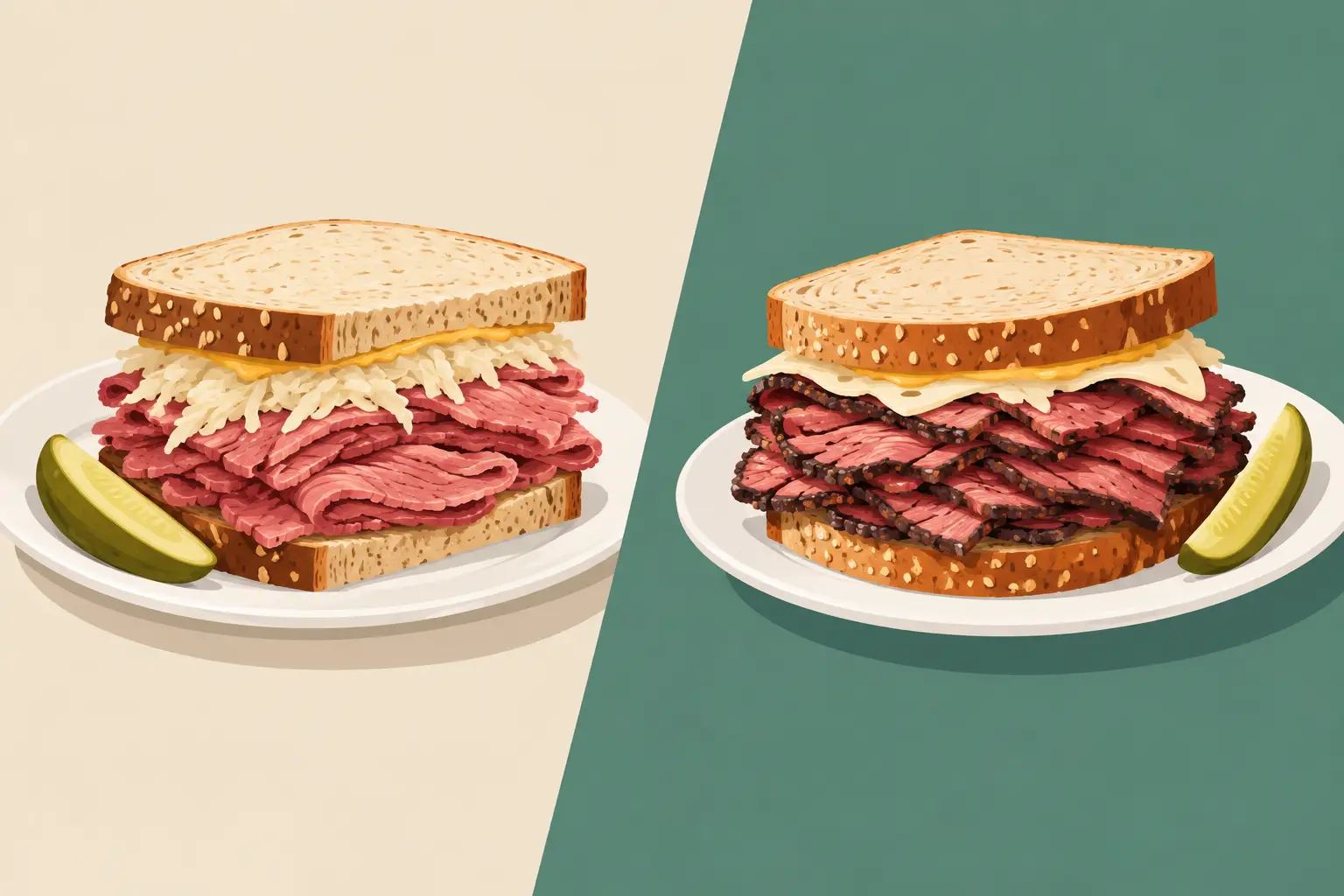
A great deli counter has a way of making a simple question feel urgent: corned beef versus pastrami – what are you really ordering? Both are cured beef, both belong between serious slices of rye, and both can make a regular lunch feel like you got lucky. But they are not the same meat with different names. The cut, seasoning, cooking method, and final flavor take them in distinctly different directions.
If you like tender, savory, old-school deli comfort, corned beef is usually your move. If you want a deeper peppery crust and a hit of smoke, pastrami is calling. Here is how to tell the difference before you take that first big bite.
Corned Beef Versus Pastrami: The Big Difference
The short version is this: corned beef is cured beef that is typically simmered, steamed, or braised until tender. Pastrami is cured beef that gets a bold spice coating, is smoked, and is often steamed before serving.
They begin with a similar idea. Beef spends time in a seasoned salt brine, which preserves the meat and gives it that familiar rosy color and savory character. From there, the paths split.
Corned beef is all about the cure and the tenderness. Traditional versions are commonly made with brisket, a flavorful cut that benefits from slow cooking. The finished meat is rich, juicy, salty in the right way, and mellow enough to let mustard, rye bread, and a crunchy pickle do their jobs.
Pastrami goes further. After curing, it is rubbed with spices, often including black pepper, coriander, garlic, and other seasonings. Then it is smoked, giving it a darker exterior, a more aromatic flavor, and a little more attitude. Good pastrami is still tender, but it arrives with a bolder first impression.
Why Is It Called Corned Beef?
The word “corned” has nothing to do with corn on the cob. It comes from the large grains, or “corns,” of salt once used to cure meat. Before modern refrigeration, curing was practical kitchen wisdom. It helped preserve beef and created a flavor people kept coming back for long after preserving food became less necessary.
Corned beef carries that history in every slice. The cure usually includes salt, sugar, and pickling spices such as peppercorns, coriander, mustard seed, bay leaf, cloves, and allspice. Recipes vary from kitchen to kitchen, and that variation matters. A great corned beef recipe is not just a list of spices. It is timing, temperature, the quality of the brisket, and the patience to cook it until it is tender without turning it mushy.
That is why corned beef has earned its place as the backbone of the classic deli sandwich. It is satisfying without needing to shout. Piled high on rye with deli mustard, it brings the kind of straight-ahead flavor that explains why generations keep ordering the same thing.
What Gives Pastrami Its Signature Flavor?
Pastrami is the more dramatic cousin at the table. It shares the curing step with corned beef, but the spice rub and smoking process create its signature character.
Black pepper and coriander are the flavors most people recognize first. The pepper brings warmth and a little bite, while coriander adds a citrusy, earthy note. Smoking ties it all together, adding a savory depth that reaches your nose before the sandwich reaches your mouth.
Many classic pastrami preparations use beef navel, which comes from the plate section near the brisket. It has more fat than a lean brisket, and that fat can make pastrami especially lush after smoking and steaming. But there is no single rule every deli follows. Some pastrami is made with brisket, and some recipes use other cuts or adjust the seasoning profile. The best indicator is always the finished slice: tender inside, deeply seasoned at the edges, and never dry.
Because pastrami has so much going on, it can stand up to strong sandwich partners. Spicy brown mustard, rye, tangy slaw, and sharp pickles all make sense beside it. If your ideal deli sandwich has a smoky aroma before you even unwrap it, pastrami has the edge.
Corned Beef Is Mellow, Pastrami Is Peppery
The flavor difference is easy to describe once you taste them side by side. Corned beef is briny, beefy, and gently spiced throughout. Its flavor is smooth and familiar, with a soft, tender texture that makes it easy to pile high.
Pastrami is more layered. You get cured beef first, then pepper, coriander, smoke, and the richness of the fat. Its outer crust gives each bite more contrast, especially when it is sliced thick enough to show off the rosy center.
Neither is automatically better. It depends on what kind of lunch you want. A corned beef sandwich is the pick when you want classic deli comfort, a clean beef flavor, and that satisfying tender chew. Pastrami is for the days when you want your sandwich to be louder, smokier, and a little more complex.
There is also room for personal preference on texture. Some diners want leaner slices, while others want the extra richness that comes with more marbling. Ask for your favorite preparation if the deli offers choices. A sandwich should work for your appetite, not make you negotiate with it.
Which Meat Belongs on a Reuben?
The traditional answer is corned beef. A classic Reuben layers corned beef with Swiss cheese, sauerkraut, and Russian or Thousand Island-style dressing on grilled rye. The salty, tender meat balances the tang of the kraut, the creamy dressing, and the buttery crunch of the bread.
That said, pastrami makes a terrific variation. Its smoke and spices can bring extra depth to the same combination, especially for people who like bolder flavors. You may see this version called a pastrami Reuben, but the name is less important than the result: hot meat, melted cheese, tangy kraut, and rye that holds the whole beautiful mess together.
If you are ordering for a group, offering both is a smart play. Some guests will go straight for the traditional corned beef Reuben. Others will spot pastrami and know exactly what they want. That is the beauty of a real deli spread – there is room for the purists and the people who always add extra mustard.
How to Order Like You Mean It
Start with the meat, then think about what you want from the sandwich. Corned beef shines on rye with mustard, but it is also right at home with Swiss, coleslaw, or a Reuben build. Pastrami loves rye too, especially with spicy mustard, Swiss, or slaw that can cut through its richness.
Bread matters more than people think. Rye brings a little tang and structure, which is why it is the traditional choice for both meats. Soft white bread can let the beef take center stage, while a sturdier roll is useful if you are carrying out a generously stacked sandwich. And if the sandwich is piled properly, bring napkins. This is not the time to pretend you can eat around the juicy parts.
For a hungry office crowd, family gathering, or game-day table, mix corned beef and pastrami into the order rather than choosing one for everybody. The two meats share enough deli DNA to belong together, but their flavors give people a real choice. Bronx Deli built its reputation around award-winning corned beef for good reason: when the recipe is mastered over generations, a classic does not need to reinvent itself.
Is One Healthier Than the Other?
Corned beef and pastrami are both cured deli meats, so sodium is part of the package. Fat and calorie levels can vary widely based on the cut, trimming, portion size, and how the sandwich is built. A leaner corned beef order may fit one person’s preference, while a fattier pastrami may be exactly what someone else is craving.
The practical move is simple: enjoy the sandwich you actually want, and choose the portion and sides that make sense for your day. Add a pickle, share fries, go with soup, or save half for later. Great deli food is meant to be enjoyed, not overthought.
The next time the menu puts you between corned beef and pastrami, trust your appetite. Choose corned beef for tender, briny tradition. Choose pastrami for smoke, pepper, and big flavor. Either way, get the rye, ask for the mustard, and make lunch worth talking about.