

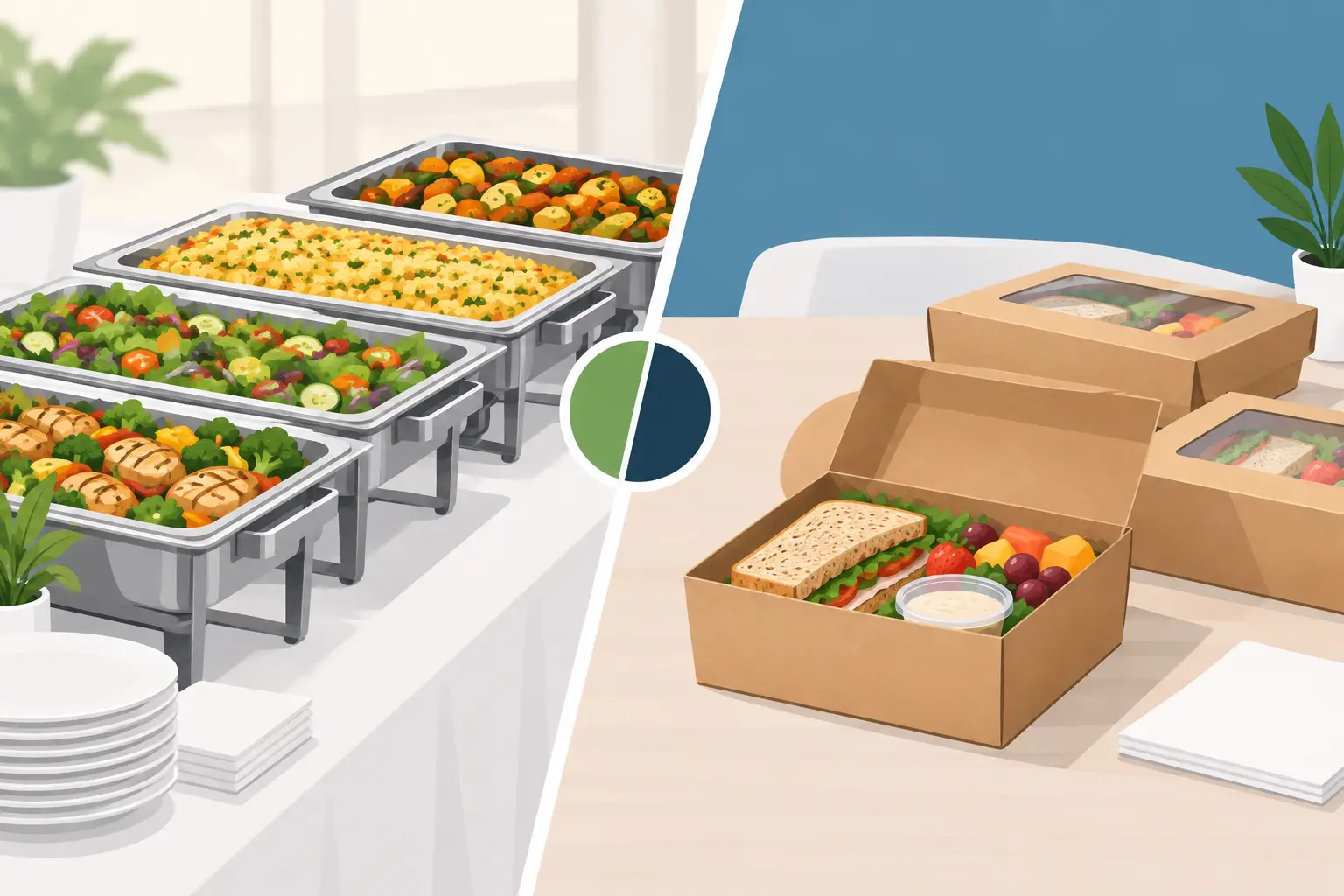
A noon meeting with 18 hungry coworkers has a different rhythm than a graduation party where guests drift in and out all afternoon. That is why catering trays versus boxed lunches is not just a menu question. It is a question of timing, space, guest expectations, and how much hosting you want to do once the food arrives.
Both options can feed a crowd well. The right one depends on whether you need everyone served individually and on the move, or whether you want the table to feel like a proper New York deli spread. Here is how to make the call with confidence.
Catering Trays Versus Boxed Lunches: The Big Difference
Catering trays are built for sharing. Think piled-high sandwiches, corned beef, turkey, pastrami, salads, sides, breads, condiments, and desserts arranged for guests to choose what they like. They turn lunch into a communal meal and usually give a group more variety on the table.
Boxed lunches are built for speed and individual convenience. Each guest receives a clearly portioned meal, often with a sandwich, side, dessert, and drink or other add-on depending on the order. There is no serving line, no reaching across the conference table, and much less guesswork when lunch needs to happen fast.
Neither is automatically better. A boxed lunch can be the hero of a packed training day, while sandwich trays can make a family gathering feel generous and relaxed. Start with the event itself, not the assumption that every crowd eats the same way.
Choose Boxed Lunches When Time Is Tight
Boxed lunches make sense when people need to grab food and keep moving. Office meetings, job-site lunches, school events, bus trips, medical office trainings, and conferences all benefit from a meal that arrives ready for each person.
The biggest advantage is control. You can collect orders ahead of time, label meals by name, and account for vegetarian choices, allergies, or other dietary preferences before the delivery arrives. That matters when a team has only 30 minutes between presentations or when guests are seated in separate rooms.
They also simplify the cleanup. Guests can take their lunch back to their desk, eat in a meeting room, or save part of it for later without leaving an open catering spread behind. For a host, that can be a beautiful thing.
Boxed lunches are especially useful when headcount is exact. If 24 people are expected, ordering 24 individual meals makes portions easy to plan. You will not have to estimate how many guests will choose corned beef over turkey or whether the last few people in line will find enough of their favorite sandwich.
There is a trade-off, though. Individual packaging can feel more formal and less festive. It also limits spontaneous choice. A guest who sees someone else enjoying a stacked corned beef sandwich cannot simply switch gears and take a bite-sized portion from a shared platter.
Choose Catering Trays When You Want a Real Spread
Catering trays bring the energy of the deli table to your event. They are a strong fit for open houses, family celebrations, game days, showers, holiday gatherings, retirement parties, and casual office lunches where people can mingle.
A tray setup invites people to build the lunch they want. One guest may go big on corned beef and rye, another may prefer turkey and a salad, and somebody else may come back for one more pickle. That variety is part of the appeal. Nobody wants to be handed a lunch they did not choose at a party.
Trays can also feel more abundant. A well-stocked sandwich spread sends a clear message: there is plenty to eat, so stay awhile. For hosts who want the food to be part of the welcome, rather than a quick item on the schedule, that matters.
This option works best when you have a reliable serving surface, enough room for guests to move around it, and someone willing to keep an eye on the setup. You may need plates, napkins, serving utensils, and a little more space than individual meals require. If guests arrive in waves, plan to keep cold items properly chilled and replenished as needed.
For mixed-age groups, trays are often the safer bet. Kids can take smaller portions, light eaters can skip what they do not want, and hungry guests can build the big sandwich they came for. How’d ya get so lucky? You picked a meal that does not make everyone eat the same lunch.
Think About the Schedule Before the Menu
The event schedule often makes the decision for you. A one-hour presentation with a fixed lunch break points toward boxed lunches. A three-hour drop-in celebration points toward trays. The longer and more flexible the event, the more useful a shared spread becomes.
Ask yourself how guests will eat. Will everyone sit down at the same time? Will they be standing, networking, or rotating through an activity? Will lunch be served in a conference room with limited tables? Are people likely to arrive late or leave early?
If the answer is that everyone must eat at once and get back to work, boxes reduce friction. If guests will wander in, visit, and graze over a longer window, trays give them a better experience.
Delivery timing matters too. Boxed lunches are usually easiest when delivery needs to land at a precise time. Trays may need a few minutes of setup, especially if you are arranging beverages, dessert, serving ware, and signage for menu choices.
Budget Is More Than the Price Per Person
It is tempting to compare only the per-person price, but the real budget includes waste, extras, and the cost of your own time. Boxed lunches offer predictable portions, which can help prevent over-ordering for a tightly counted meeting. They may also reduce the need for extra plates and serving tools.
Catering trays can offer more flexibility for a larger group, particularly when guests have different appetites. But they require smart ordering. If your crowd is known for hearty deli sandwiches, do not plan like everyone is having a half portion. A room full of hungry salespeople can make a beautiful tray disappear fast.
Consider what else is being served. If there is cake, appetizers, and a full drink station, guests may eat lighter at lunch. If sandwiches are the main event after a long morning, add satisfying sides and make sure the portions match the crowd.
A Smart Middle Ground for Mixed Groups
You do not always have to choose one format for every guest. A hybrid order can solve a lot of problems. For example, individual boxed lunches can cover staff members working through a scheduled meeting, while sandwich trays can serve visitors stopping by an open house.
Another approach is to use trays for the main meal and order a few individually prepared options for guests with specific dietary needs. That keeps the shared table lively while giving everyone a meal they can enjoy comfortably.
This is also useful when you know a few guests will need to eat on the road. Let the people with a hard stop take boxed lunches, and let everyone else settle in around the trays. Good catering should fit the day, not force the day to fit the catering.
Questions to Answer Before You Order
Before you decide, confirm the guest count, serving time, location, available tables, and whether people will eat together or in shifts. Then think about food preferences. A group that loves classic deli favorites may appreciate the freedom of a tray spread, especially when generous portions and familiar sides are part of the plan.
If you are collecting individual orders, set a firm deadline. It gives the caterer time to prepare accurately and keeps you from chasing lunch choices ten minutes before delivery. If you are ordering trays, ask guests about major dietary needs early so the spread has enough variety for the whole room.
For Pontiac-area hosts who want the comfort of an old-school deli meal without the planning headache, Bronx Deli can help match the catering format to the occasion. The goal is simple: plenty of good food, delivered in a way that lets you enjoy your own event.
When the clock is running, boxed lunches keep everybody moving. When the room is meant for gathering, catering trays make the meal part of the memory. Pick the format that gives your guests less hassle and a better sandwich.